Metric Framework: AARRR
To evaluate impact, I mapped the problem to the AARRR funnel:
- Acquisition: Not directly impacted
- Activation: Users failed to discover filters early
- Retention: Filter usage strongly correlated with repeat sessions
- Referral: Creative content was more likely to be shared
- Revenue: Engagement directly influenced ad impressions
Success Metrics & Thresholds
- Acquisition: +20% monthly growth in installs or filter‑promo page visits
- Activation: ≥60% of new users apply at least one filter in their first 3 sessions
- Retention: ≥40% of users return within 7 days to edit photos with filters
- Referral: ≥15% of users share filtered photos or send invites
- Revenue: Track branded filter partnerships and ad impact (kept stable during rollout)
Focus Areas
I prioritized:
- Activation — ensuring users encounter filters early
- Retention — increasing repeat usage through creative engagement
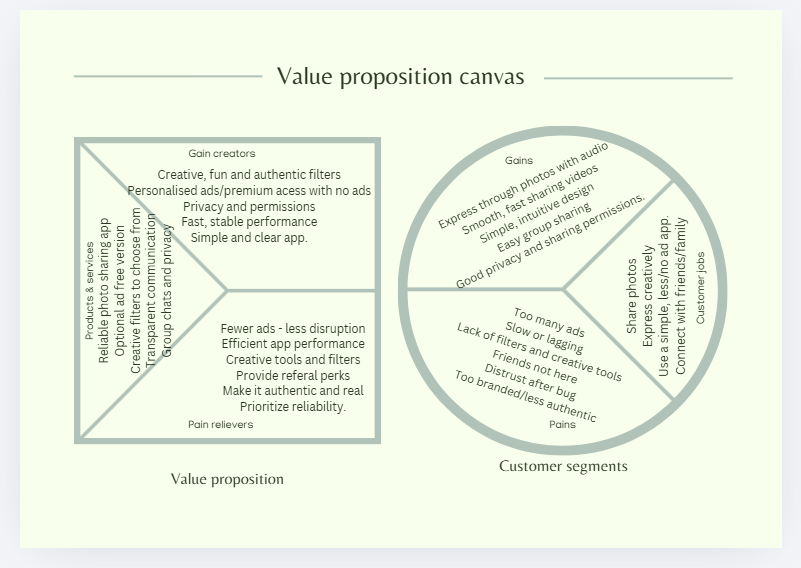
Value canvas used to align user needs and business outcomes.
What I Did Not Optimize For
- Ad reduction (out of scope due to revenue constraints)
- Feature expansion (problem was discovery, not capability)
This helped keep the solution focused and realistic.